For years air was enough. Air handlers pushed cold air through the floor or ceiling, and racks returned hot air that was removed and cooled again. With high-density racks, such as those used for AI training and inference, that arrangement reaches its limit: no airflow can cope without spending too much energy and taking too much space.
Three families of solutions
There are three main paths. With direct-to-chip liquid, cold plates carry liquid to the processors, the biggest heat source. With rear-door heat exchangers, the heat from the rack is removed by a coil door before it reaches the room. With immersion, servers sit submerged in dielectric fluid. Each has its own requirements, and many facilities combine more than one.
What changes in hydraulics
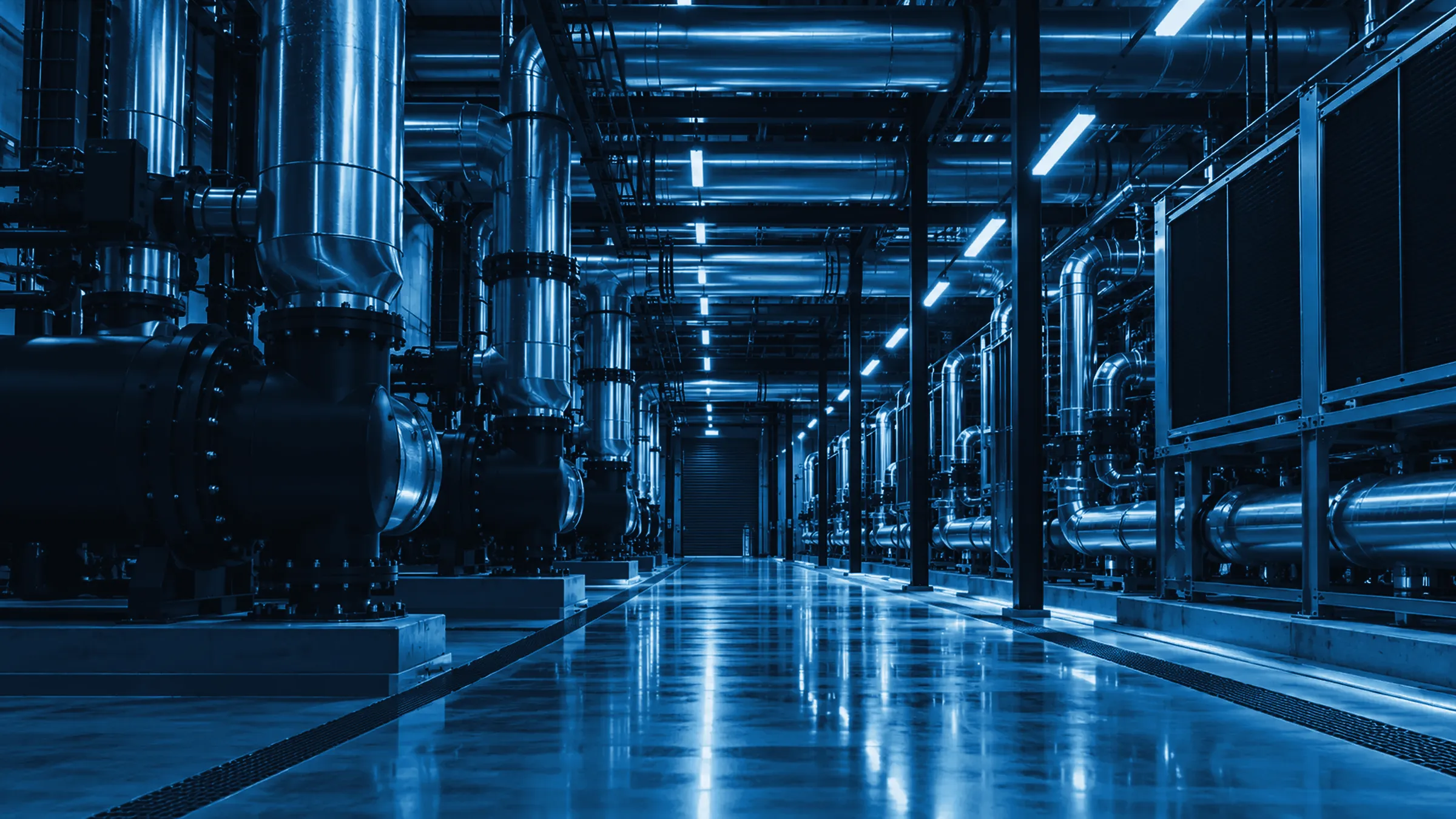
Piping now gets close to the IT equipment. That demands attention to leaks, isolation valves per rack, filtration and fluid quality. Hydraulic redundancy, which used to be a chilled water plant topic, becomes part of the room design.
What changes in power and operations
Liquid cooling usually raises return water temperature, which makes it possible to remove heat with less energy. In exchange, maintenance has to be planned so components can be replaced without exposing equipment to liquid, and the team needs new procedures.
Where to start
The starting point is the expected density per rack, today and in the coming years. From there you decide where air is still enough, where liquid is needed and how to leave infrastructure ready for the transition.